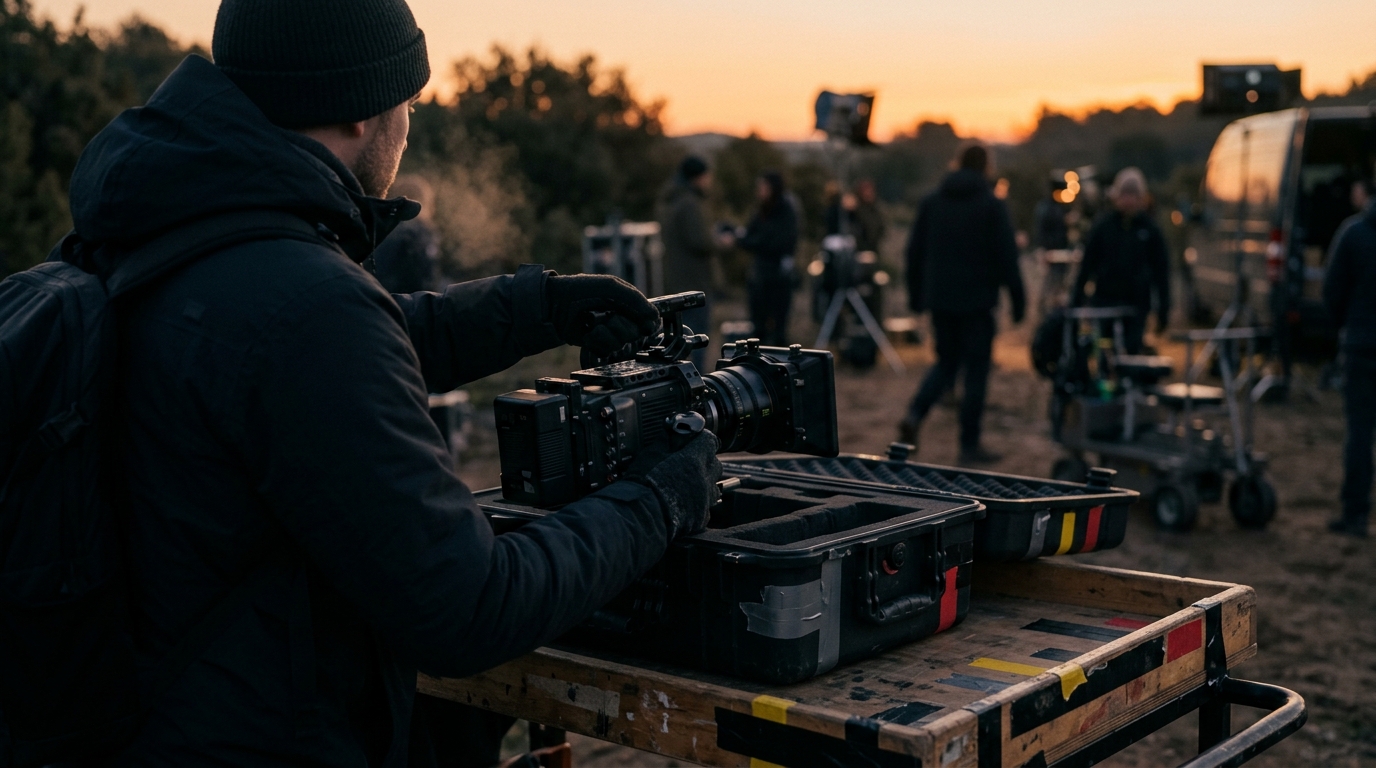
A cinematographer packing a cinema camera into a Pelican case at dawn on set.
03  ·  The lead offer · The Person Inside the Case

One DP. One production.

A cinematographer-portrait film about what your cases actually protect and the people who depend on them. Eight to twelve minutes. A treatment, not a deck.

 ·  Logline

A working cinematographer's 1510 rides on the open back of a truck through the Atlas Mountains at first light. The DP is asleep against the window. The case is in every frame of their working life and the center of none of them. That's the film.

 ·  Treatment

What it is, in plain terms.

Subject
One working cinematographer. A real person with a name, a reel, and a kit list. Not "the creator." Not "the DP." A character, filmed across a single real production from pre-light to wrap.
The object
The 1510 and the 1610. Present in nearly every frame, central to none of them. The case earns the screen exactly the way it earns its place in the kit: by being trusted enough to forget.
Form
Eight to twelve minutes. Documentary, observational, unposed. Anamorphic, first-light palette, real locations. No voiceover hard-sell. The product never gets a beauty shot it didn't earn.
Tone
Restrained and warm, with the exhaustion and craft of the job left in. The opposite of a torture test: the quiet that comes after you trust the gear and stop thinking about it.
The arc
Pre-light at 4am. The drive. The shoot. The single take that can't be redone. Wrap. The case goes back in the truck. The person who depends on it falls asleep against the glass. We close on the opening image.
Distribution
ASC and ICG channels, where your real audience already lives. B&H editorial. The festival short-doc circuit. A flagship for the prosumer pivot that's a film, not an announcement.
What it proves
That "we enable the stories to happen" is true, and that Pelican can show it. The line, finally filled.
 ·  Three frames

The film, in three images we already know.

Open

The truck at first light.

The 1510 strapped to the open bed on a switchback road. Dust in the air, long shadows. The case is sharp and central, the landscape soft behind. The opening frame of the whole brand.

Middle

The hands that load the kit.

Over the shoulder at dawn, gaffer tape on the case, breath visible in the cold. The camera goes in. This is the trust made literal, fifty times a shoot, never thought about once.

Close

Asleep against the glass.

Wrap. The case rides back in the truck. The person who depends on it falls asleep against the window, mountains in the reflection. We hold. Cut to black. The line lands.
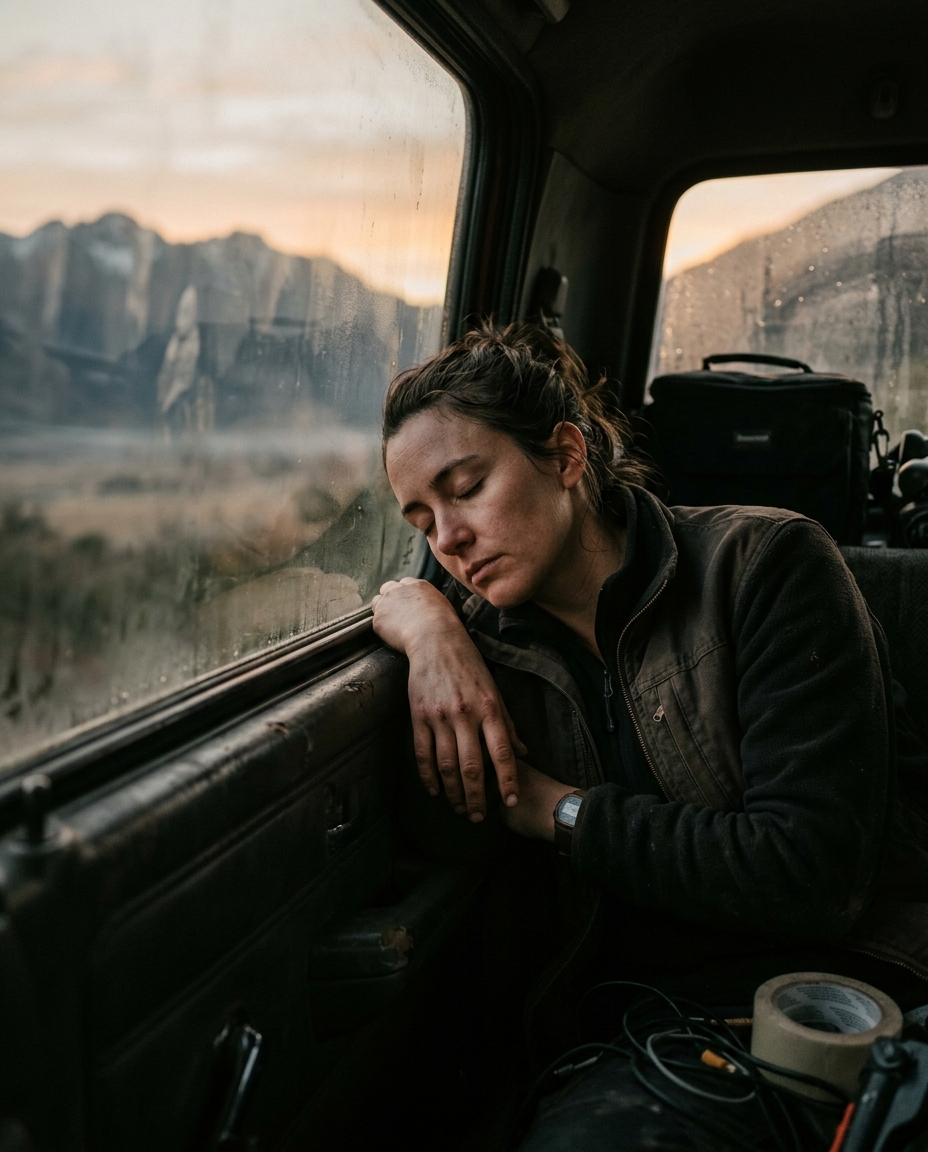
A cinematographer asleep against a truck window at dawn during a shoot, the closing frame.
 ·  The closing frame

The case is in every frame of their working life and the center of none of them.

That sentence is the film. Everything before it is craft. Everything after it is the brand you've been reaching for.

 ·  What the production includes

A finished film, and the cut-downs that pay for it.

One flagship short, plus the assets that let it work across the channels you already run.

Flagship
The 8–12 minute film. Director-led, graded and sound-designed, finished to festival standard.
Cut-downs
A 60-second brand spot, three 15-second social cuts, a vertical edit for the channels where your audience actually scrolls.
Stills
A licensed photographic set from the shoot. Real frames for the product pages that currently run on seamless.
The pipeline
A repeatable model. Once the first one exists, every following film costs less and lands faster.
 ·  The number, stated plainly

$75K to $100K for the flagship.

Director-led, one real production, a finished film and the cut-downs around it. Priced for a $728M brand that knows the difference between authored work and commodity output. Katie has seen what this costs at Filson. This is in range.